Upcoming Project Spotlight
In My Honor: One Woman’s Trailblazing Path to the Federal Bench, Rosemary Collyer tells about her unexpected journey to becoming the nation’s most powerful prosecutor against unfair labor practices and a federal district judge in the District of Columbia.
Born just after the close of World War II, she grew up in a large Irish Catholic family in a New York suburb and witnessed some of the tensions of the early civil rights era through high school and college. She closely followed her father’s work as a Bloomingdale’s executive and his two terms as mayor of Stamford, Connecticut, as he advocated for human and civil rights.
She never planned to go into the law; friends and colleagues had to convince her. She loved it. She soon became the first woman to chair the Federal Mine Safety and Health Review Commission, serve as general counsel of the National Labor Relations Board, and chair the management committee of a major law firm. She was just the eighth woman to join the U.S. District Court of the District of Columbia since its start in 1801, and the third woman to serve as presiding judge of the Foreign Intelligence Surveillance Court.
My Approach
I worked with Judge Collyer for several years, enjoying her sense of humor, humility, and honesty. I also admired her strength as she valiantly fought a debilitating illness while we collaborated on her book. We talked weekly over coffee at her home for nearly a year before beginning to write. She died in early June 2026, having seen the writing through the final stages. She was awed that University Press of Kansas planned to publish her book, My Honor: One Woman’s Trailblazing Path to the Federal Bench (in April 2027). She hoped her story would be treasured by her family and friends, but also that her words and thoughts would be instructive for younger and future lawyers and jurists. She also hoped her story might help Americans seeking to understand the underpinnings of their country’s democracy and the vital work of federal judges seeking to protect it.
The Honorable Rosemary M. Collyer
1945 – 2026
Rosemary M. Collyer, a federal district court judge in the District of Columbia who was highly regarded for her careful judicial reasoning and her trailblazing career as a woman in the law and government, died on June 7, 2026, in Rockville, Maryland, after a long illness. She was 80.
Throughout her career, Collyer mentored younger lawyers and jurists and maintained a humility that drew the respect of those around her.
“One of her skills was she was not so taken with herself. She didn’t pretend she knew everything while in front of the lawyers,” Senior Judge Thomas F. Hogan, who was the court’s chief judge when Collyer joined, told me. She also gained a reputation for her well written, carefully reasoned rulings, he said. “She made her mark.”
On the U.S. District Court of the District of Columbia since 2003, Collyer ruled on a range of high-profile cases on voting rights, the constitutional power of the purse, the U.S. military’s drone killings of Americans in Yemen, and more. As presiding judge of the Foreign Intelligence Surveillance Court (FISC), she handled the oversight of surveillance of Carter Page, a Trump campaign adviser suspected of colluding with Russian government officials.
Rosemary Elizabeth (Mayers) Collyer was born on November 19, 1945, in Port Chester, New York, the eighth of nine children of Thomas C. Mayers and Alice M. Henry. Family members called her “Rory.” She fondly recalled family dinners, with everyone gathered around a long table and her father talking about family history or quizzing her and her siblings on current events. She spent most of her childhood in Stamford, Connecticut, where her father was elected mayor in 1963. A Republican who rode into office with Democratic support, Mayers pushed for a progressive urban renewal plan and expanded civil rights. His strong human rights convictions and life lessons made a deep impression on his talented daughter.
In 1968, Collyer graduated cum laude with a bachelor’s degree in history from Trinity College in Washington, D.C. (now called Trinity Washington University). Three weeks after graduation, she married Philip L. Collyer. The two had met in junior high school and started dating when she was sixteen. “His importance goes to my genes and the entire warp and woof of my life,” she once said. After living and working various jobs in Canada, New York, and then Colorado, colleagues convinced her to try law school.
In 1974, Collyer began studying in the evenings at the University of Denver Law School (now Sturm College of Law), just months before giving birth to their son, Timothy. She immediately took to her studies while juggling coursework and internships, amid duties of motherhood, and graduated eighth in her class in 1976.
Collyer began her law career as a labor lawyer at Sherman & Howard LLC in Denver, primarily representing Colorado mining companies. She fearlessly clambered down into underground mines to better understand the requirements and effects of new mining health and safety laws. In 1981, the Reagan administration brought her to Washington to serve as chair of the Federal Mine Safety and Health Review Commission. The Senate swiftly confirmed her nomination.
Less than three years later, President Reagan nominated her to be general counsel for the National Labor Relations Board. She was thirty-nine. Democrats and labor union executives harshly challenged her during confirmation hearings that fall. Ultimately, Reagan granted her a recess appointment and, after he won reelection, the Senate confirmed her nomination.
She soon surprised many observers with her handling of a major labor dispute involving a work contract that General Motors and the United Auto Workers had reached for a new manufacturing plant to build the Saturn automobile. Her ruling against the National Right to Work Committee, allowing the union’s work contract to go forward, earned her the respect of labor leaders.
In 1989, at the end of her term, Collyer joined the law firm of Crowell & Moring LLP in Washington DC, where she notably represented Greyhound Bus Lines during a multiyear labor strike. In 1995, she was elected the first woman chair of the firm’s management committee.
In spring 2002, when proposing to President George W. Bush that he nominate Collyer to be a district judge, White House aides noted that Collyer had demonstrated at the NLRB a “sound philosophy of restraint” and had “shown herself capable of reaching results through a disciplined application of the law that are contrary to her own political philosophy.” Her Senate confirmation proceeded smoothly, and she became just the eighth woman to serve on the court.
More than a dozen years later, The Wall Street Journal wrote that while Collyer was not a household name, most people had heard of her decisions. In March 2005, during the Global War on Terrorism, she blocked the transfer of thirteen detainees held at Guantanamo to Yemen because it would take them outside the court’s jurisdiction. She wrote that “no free man should be imprisoned, dispossessed, outlawed, or exiled save by the judgment of his peers or by the law of the land.” Also in 2005, she blocked a Bush administration plan governing employees of the newly formed Department of Homeland Security because it would disadvantage workers. She explained that “collective bargaining would be on quicksand.” In 2012, as part of a three-judge panel, she voted with the majority to reject Texas’ voter identification law because of its impact on poor and minority voters.
In 2015, Collyer permitted the U.S. House of Representatives to proceed with a lawsuit against the executive branch over Affordable Care Act spending. She wrote that the House “had a core constitutional interest in preserving its power of the purse.” The next year, she upheld a challenge to the government’s designation of insurer MetLife as “too big to fail” that had put the company under heightened government scrutiny.
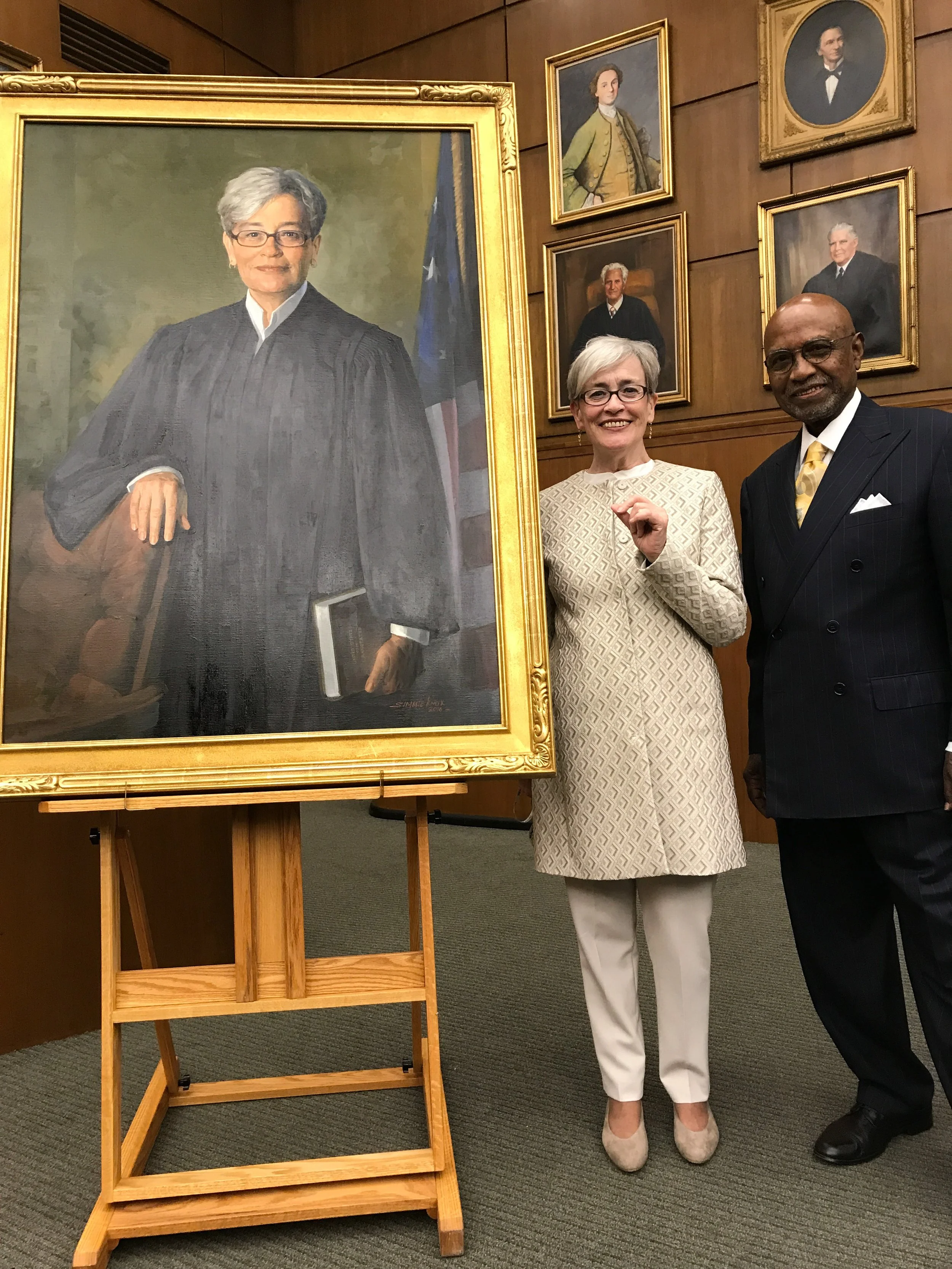
From the bench, she sought to mentor other women in the courtroom. D.C. Superior Court Judge Darlene M. Soltys had served as an assistant U.S. attorney and appeared before Collyer in several trials related to the M Street Crew, a notorious drug gang in Northeast Washington. At the unveiling of Collyer’s judicial portrait in 2017, Soltys said Collyer “had high expectations that women appearing in her courtroom would perform as well as, if not better, than any male attorney.” At the same ceremony, Judge Beryl A. Howell said Collyer immediately served as a mentor at the district court. Collyer was “a go-to sounding board” for all judges, someone who “will listen and raise questions, but without dictating answers.” Collyer encouraged her law clerks to speak up about cases they were helping with and even contradict her, thereby fostering careful and thoughtful deliberation about each decision. She also prided herself in learning about their individual career goals and helping to make them a reality.
In 2013, Supreme Court Chief Justice John G. Roberts appointed Collyer to the FISC. In 2016, she reduced her caseload by going to “senior status” when Roberts named her FISC’s presiding judge. Among her last actions on the FISC was a rare reprimand of the FBI regarding its handling of applications for warrants to surveil Page.
In 2017, Collyer was diagnosed with ovarian cancer. She continued to carry a full caseload through treatment and, a year later, doctors declared she was free of the cancer. She soon developed a related but rare neurological disorder that forced her to step down from the bench in March 2020.
In recent years, she reconnected with two law school classmates, Debra Lappin and Kris Hoeltgen. In March, they launched a scholarship fund for women students attending the University of Denver Sturm College of Law. Collyer also began working on her memoir. My Honor: One Woman’s Trailblazing Path to the Federal Bench is scheduled to be published by University Press of Kansas in spring 2027.